


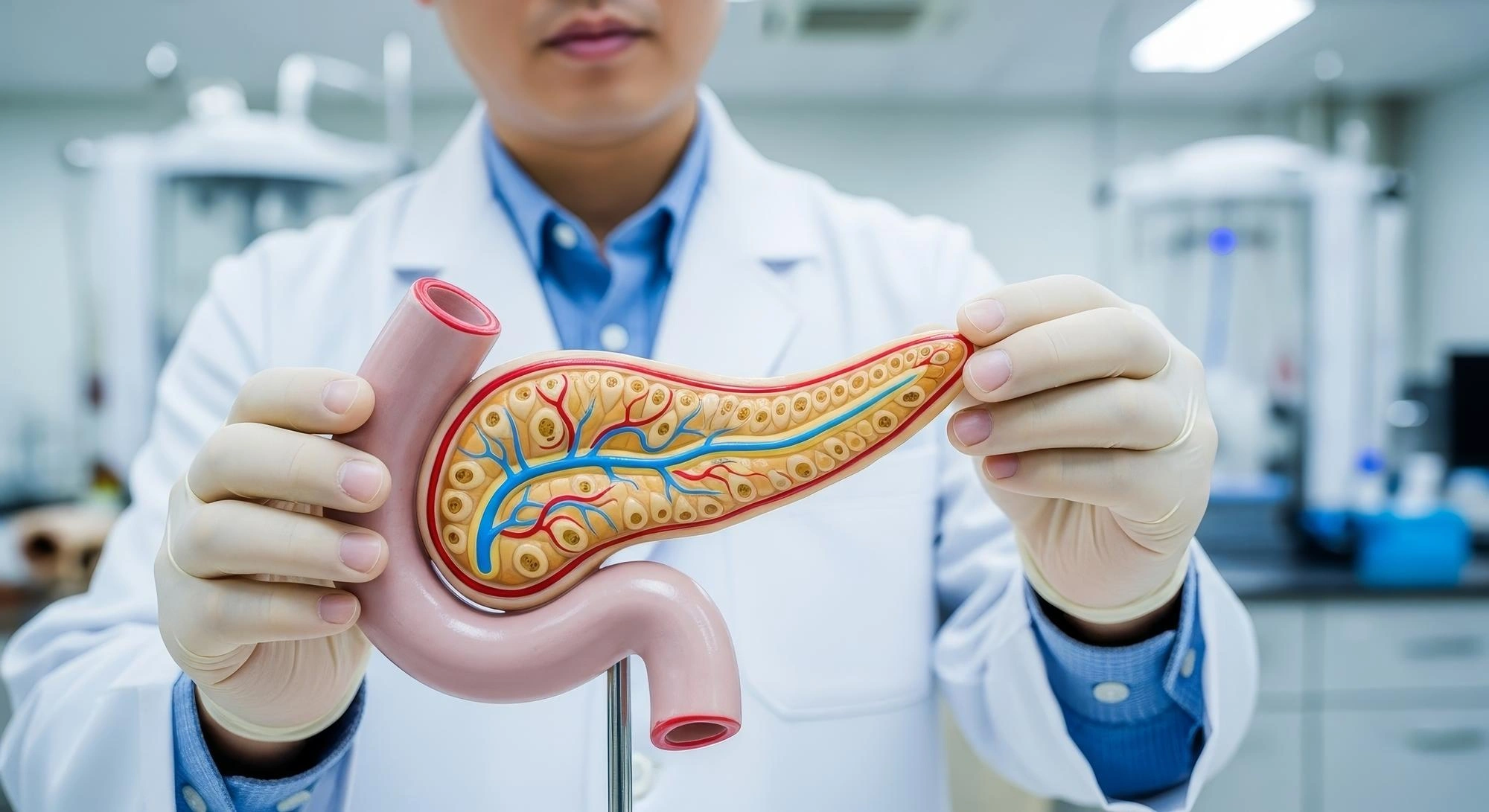
Hearing that you may need pancreatic surgery can be frightening, especially since the pancreas is a less familiar organ than the heart or lungs. Understanding what the pancreas does and why surgery may be needed can make the process feel less overwhelming.
Why the Pancreas Matters
The pancreas sits behind the stomach and plays two major roles. It produces digestive enzymes that help break down food, and it makes insulin and other hormones that control blood sugar. When the pancreas is damaged or diseased, both digestion and blood sugar balance can be affected, which is why problems here are taken seriously.
Common Reasons for Surgery
Surgery is usually considered for pancreatic tumours or cysts, pancreatic cancer, or severe cases of chronic pancreatitis that do not respond to other treatments. The specific operation depends on where the problem is located. A tumour in the head of the pancreas, for example, may require a Whipple procedure, which removes the head of the pancreas along with parts of nearby organs. A problem in the tail of the pancreas may instead need a distal pancreatectomy, removing only that section.
How Robotic Techniques Help
Pancreatic surgery is technically demanding because the organ sits close to major blood vessels and other organs. Robotic-assisted techniques give surgeons a magnified view and precise instrument control, which can help protect healthy tissue and reduce complications compared with larger open incisions, in suitable cases.
What Recovery Looks Like
After pancreatic surgery, most patients stay in hospital for observation and pain management. Diet is usually reintroduced gradually, starting with liquids before moving to solid food as digestion adjusts. Some patients may need enzyme supplements to help with digestion afterward, and blood sugar levels are monitored closely, since the pancreas is directly involved in producing insulin.
Questions Worth Asking Your Surgeon
Before any pancreatic procedure, ask your surgical team what part of the pancreas is affected, why a particular approach is recommended, what recovery will involve, and how your digestion and blood sugar will be supported afterward. Pancreatic conditions can often be managed successfully with the right treatment plan, and a clear understanding of your options is the first step toward feeling confident about the road ahead.