


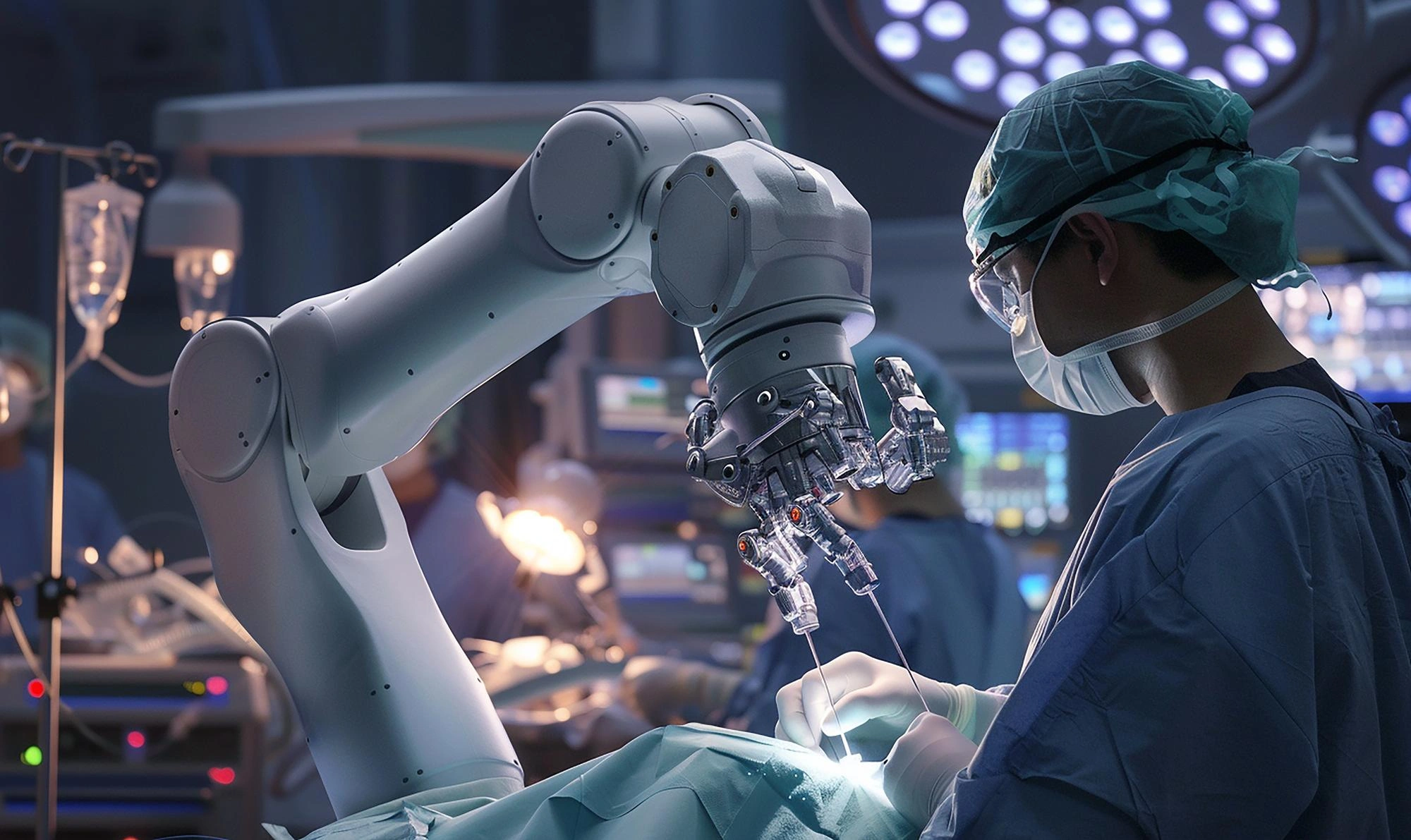
If your doctor has recommended robotic surgery, it's natural to have questions. Here is a simple explanation of what it means and why it's used.
What Robotic Surgery Actually Means
Robotic surgery does not mean a robot performs the operation on its own. A trained surgeon is in control at every moment, seated at a console just a few feet from the operating table. The surgeon's hand movements are translated in real time into the movement of very fine robotic instruments inside the body. Think of it as an extension of the surgeon's own hands, offering a steadier, more precise reach than is possible with the human hand alone.
Why Surgeons Choose This Approach
Traditional open surgery often needs a large incision to give the surgeon a clear view and enough room to work. Robotic surgery is performed through a few small cuts, usually less than a centimetre wide. A high-definition 3D camera gives the surgeon a magnified, detailed view of the surgical area, while the robotic arms can rotate and bend in ways that go beyond natural wrist movement. This combination allows for very precise work in tight spaces, such as around the pancreas, liver, stomach, or bowel.
What It Can Mean for Patients
Because the incisions are smaller, patients often experience less pain after surgery and require fewer pain medications. Blood loss during the procedure tends to be lower, and many patients are able to leave hospital sooner and return to normal activities faster than with open surgery. Scarring is also typically much less noticeable.
Is It Right for Everyone?
Robotic surgery is not automatically the best choice for every patient or every condition. The decision depends on factors like the type and stage of disease, the patient's overall health, and the complexity of the procedure. Your surgical team will assess your specific case and explain whether a robotic approach is suitable, discussing the expected benefits and any risks involved.
Talk to Your Surgical Team
The most important step is an open conversation with your surgeon. Ask what the procedure involves, what recovery will look like, and how the team's experience with robotic techniques applies to your particular condition. A well-informed patient is better equipped to make confident decisions about their own care.