


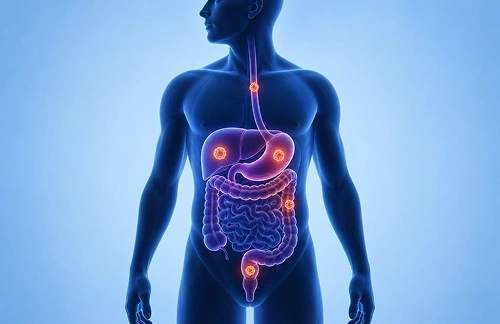
Cancers of the stomach, oesophagus and intestine call for surgery that is both oncologically thorough and carefully tailored to the patient. Advances in surgical technique have made this possible with far less impact on the body than before.
Understanding GI Cancer Surgery
Gastrointestinal cancer surgery involves removing tumours of the oesophagus, stomach, small intestine or colon, along with the surrounding lymph nodes, to achieve the best chance of cure. The exact operation depends on the tumour's location, size and stage, and is often planned alongside chemotherapy or radiotherapy.
Dr. Santhosh Anand K S, a Laparoscopic, Robotic and HPB Cancer Surgeon associated with Apollo Hospitals, Greams Road, Chennai, performs GI cancer surgery at Chennai Robotic Pancreas Clinic, drawing on training from AIIMS, JIPMER and advanced robotic surgery experience in Pittsburgh, USA.
Types of GI Cancers Treated
Surgical treatment is offered for a range of gastrointestinal cancers, including:
- Gastric (stomach) cancer: Partial or total removal of the stomach, depending on tumour location and extent.
- Colorectal cancer: Removal of the affected segment of colon or rectum along with regional lymph nodes.
- Oesophageal cancer: Complex surgery to remove the tumour and reconstruct the digestive passage.
- Small intestinal tumours: Less common but treated with the same careful oncological approach.
Why Choose a Minimally Invasive Approach for Cancer Surgery?
Where appropriate, laparoscopic or robotic techniques allow these operations to be performed through small incisions rather than one large cut, without compromising the thoroughness of cancer removal. Patients often experience less pain, a shorter hospital stay and a quicker return to daily activities, which also means they are ready sooner for any additional chemotherapy that may be needed.
Who is a Good Candidate?
Patients diagnosed with stomach, colorectal, oesophageal or small intestinal cancer are evaluated individually to determine the most suitable surgical approach. Factors such as tumour stage, location and the patient's overall fitness all play a part, and Dr. Santhosh Anand discusses these options in detail during consultation.
frequently asked questions
-
Surgery is the main treatment for most GI cancers when the disease is confined to a removable area, though it is often combined with chemotherapy or radiotherapy.
-
Yes, many stomach, colorectal and oesophageal cancer surgeries can be performed laparoscopically or robotically in suitable patients.
- This varies by procedure, ranging from about three to five days for colorectal surgery to longer stays for more extensive oesophageal or gastric operations.
-
Many patients require chemotherapy or radiotherapy after surgery, depending on the cancer type and stage, and this is planned with the wider treatment team.
Consult Dr. Santhosh Anand K S at Chennai Robotic Pancreas Clinic
For concerns related to gastrointestinal cancer surgeries, consultations are available at Chennai Robotic Pancreas Clinic. To book an appointment, call the clinic directly.