


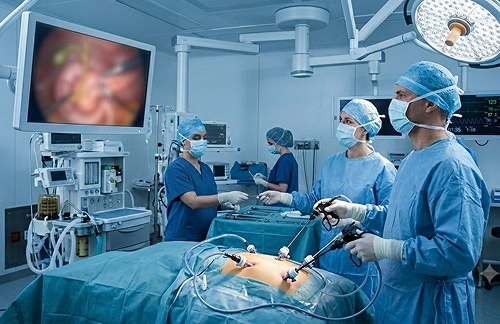
Small incisions, less pain and a faster return to normal life are no longer the exception in gastrointestinal surgery, they are increasingly the standard, thanks to laparoscopic and robotic techniques.
What is Minimally Invasive GI Surgery?
Minimally invasive GI surgery covers both laparoscopic and robotic techniques used to treat conditions of the stomach, intestine, gallbladder, liver and pancreas through small incisions, guided by a camera, instead of one large surgical opening. It is used across a wide range of conditions, from gallstones to complex cancers.
Dr. Santhosh Anand K S, a Laparoscopic, Robotic and HPB Cancer Surgeon associated with Apollo Hospitals, Greams Road, Chennai, applies minimally invasive techniques wherever appropriate at Chennai Robotic Pancreas Clinic, having trained extensively in both laparoscopic and robotic surgery, including advanced training in Pittsburgh, USA.
Benefits Over Open Surgery
Compared with traditional open surgery, minimally invasive techniques offer several practical advantages:
- Smaller incisions: Less scarring and lower risk of wound-related complications.
- Less pain: Patients typically need fewer pain medications after surgery.
- Shorter hospital stay: Many procedures allow discharge within one to three days.
- Faster return to daily life: Most patients resume normal activity considerably sooner than after open surgery.
What to Expect as a Patient
Surgery is performed under general anaesthesia through several small incisions, or in robotic cases, through the robotic system's ports. Depending on the procedure, patients are usually walking within a day and eating a normal diet soon after. Dr. Santhosh Anand explains the specific recovery expectations for each procedure during the pre-operative consultation.
Who is a Good Candidate?
Most patients requiring gallbladder removal, hernia repair, or surgery for benign or early-stage cancerous conditions are candidates for a minimally invasive approach. Suitability depends on the specific condition, prior surgical history and overall health, all of which are assessed individually.
frequently asked questions
-
Yes, for suitable patients, minimally invasive surgery carries a similar or lower complication rate compared with open surgery, along with faster recovery.
-
Gallstones, hernias, appendicitis, many stomach and intestinal conditions, and increasingly complex liver and pancreatic surgery can all be approached this way.
- Not necessarily for every case. Robotic surgery offers particular advantages for complex or delicate dissections, while standard laparoscopic surgery remains excellent for many routine procedures.
-
Many patients go home within one to three days, though this depends on the specific procedure performed.
Consult Dr. Santhosh Anand K S at Chennai Robotic Pancreas Clinic
For concerns related to minimally invasive gi surgery, consultations are available at Chennai Robotic Pancreas Clinic. To book an appointment, call the clinic directly.