


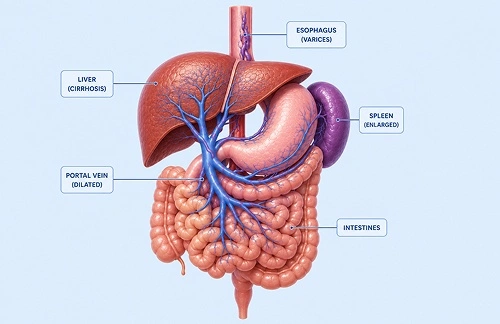
When liver disease raises pressure in the veins that feed it, the effects are felt throughout the abdomen, from an enlarged spleen to dangerous bleeding. Portal hypertensive surgery addresses these complications directly.
Understanding Portal Hypertension
Portal hypertension is a rise in pressure within the portal venous system, the network of veins carrying blood from the intestines and spleen to the liver. It is most commonly caused by cirrhosis or other chronic liver disease, and can lead to enlarged veins in the food pipe and stomach, an enlarged spleen, and fluid build-up in the abdomen.
Dr. Santhosh Anand K S, a Laparoscopic, Robotic and HPB Cancer Surgeon associated with Apollo Hospitals, Greams Road, Chennai, manages the surgical aspects of portal hypertension at Chennai Robotic Pancreas Clinic, working alongside gastroenterologists and hepatologists to plan the safest course of treatment.
Surgical Options
Depending on the underlying cause and severity, several surgical approaches may be considered:
- Devascularisation procedures: Surgery to interrupt blood flow to enlarged, bleeding-prone veins around the food pipe and stomach.
- Shunt surgery: Creating an alternative pathway for blood flow to reduce pressure in the portal system.
- Splenectomy: Removal of an enlarged spleen when it is causing significant symptoms or low blood counts.
- Combined endoscopic and surgical care: Coordinating band ligation or sclerotherapy with surgery for the best overall control of bleeding risk.
What to Expect as a Patient
Treatment for portal hypertension is planned around the patient's liver function and overall health, since the underlying liver disease affects surgical risk. Some procedures are performed laparoscopically, reducing recovery time, while more complex cases may require open surgery. Dr. Santhosh Anand explains the risks and expected recovery clearly before any procedure.
Who is a Good Candidate?
Patients with cirrhosis or other liver conditions who have had episodes of variceal bleeding, an enlarged spleen with low blood counts, or recurrent fluid build-up despite medical treatment are often referred for a surgical opinion. A careful assessment of liver function guides which procedure, if any, is appropriate.
frequently asked questions
-
No, many patients are managed with medication and endoscopic treatment first. Surgery is considered when these measures do not adequately control bleeding or other complications.
-
The most common cause is cirrhosis of the liver, though other conditions affecting blood flow to or from the liver can also be responsible.
- Because it is closely tied to liver function, risk varies from patient to patient, and this is why thorough liver assessment is carried out before any procedure is planned.
-
Splenectomy can be performed safely in carefully selected patients, though it requires careful pre-operative planning given the associated liver condition.
Consult Dr. Santhosh Anand K S at Chennai Robotic Pancreas Clinic
For concerns related to portal hypertensive surgeries, consultations are available at Chennai Robotic Pancreas Clinic. To book an appointment, call the clinic directly.