

Can Robotic Surgery Improve Outcomes in Pancreatic Cancer Treatment?
A pancreatic cancer diagnosis is undeniably challenging. Because the pancreas is hidden deep inside the abdomen near major blood vessels, any surgical intervention requires extreme precision. Historically, this meant undergoing highly invasive open surgery with long, painful recoveries and a high risk of complications.
Advanced medical technology has opened a vital new door through robotic-assisted surgery. This innovative approach is fundamentally changing the landscape of gastrointestinal oncology, offering newfound precision and significantly faster healing. When looking closely at how robotic surgery is transforming GI cancer treatment, we see that it provides a level of microscopic accuracy that traditional methods simply cannot match. Let us break down exactly how this technology improves outcomes for pancreatic treatments, utilizing key clinical insights from specialized gastrointestinal surgeon Dr. Santhosh Anand.
Defining the Technology: Robot-Assisted vs. Autonomous
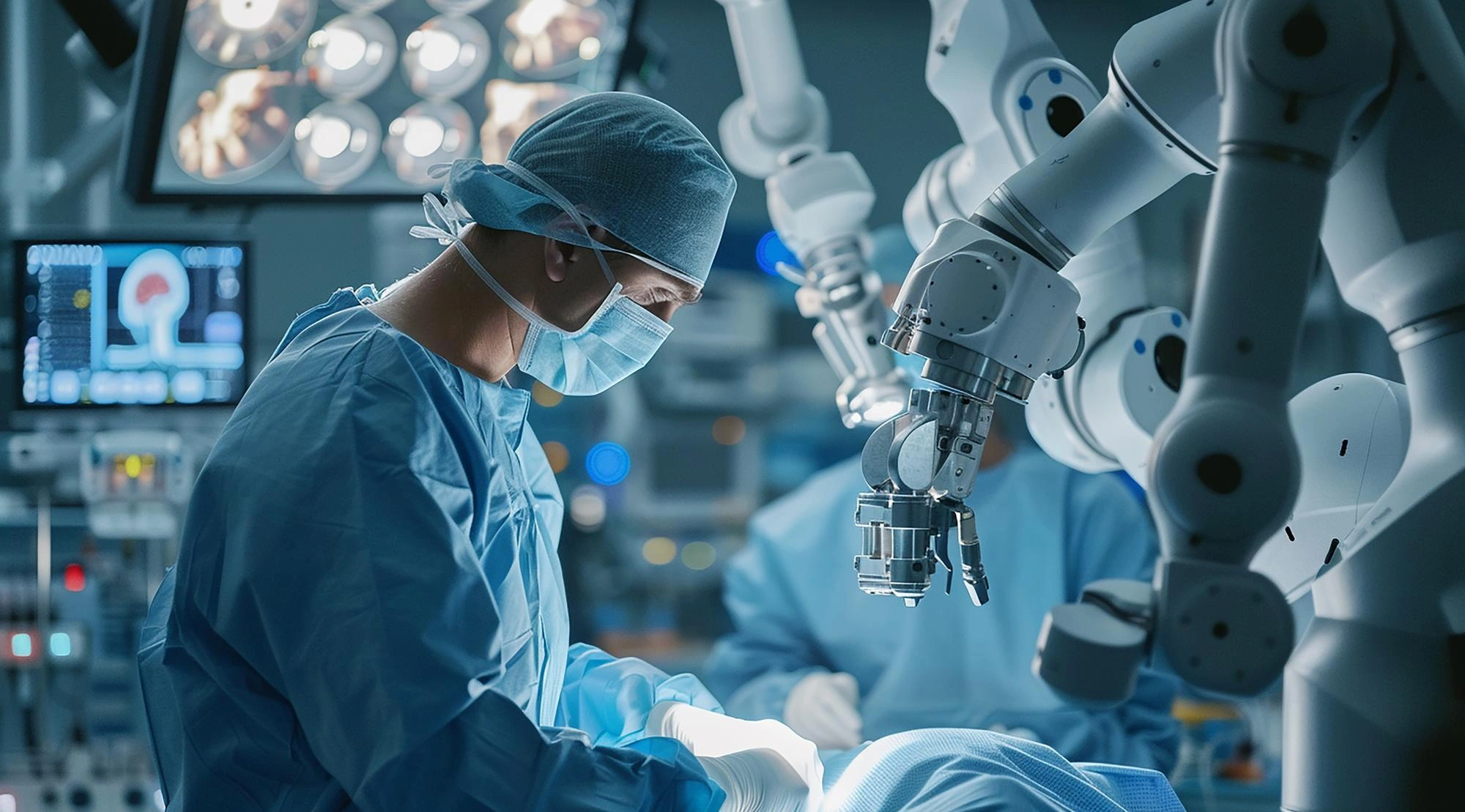
A very common misconception among patients is that a machine independently performs the operation. In reality, this is strictly a robot-assisted procedure. The robotic system cannot move or make decisions on its own. Every single movement, incision, and stitch is entirely driven in real-time by a highly skilled surgeon sitting at an advanced computer console right beside the operating table. It is a tool that enhances human skill, not a replacement for it.
The Magnification Breakthrough: Seeing the Invisible
One of the greatest hurdles in traditional open pancreatic surgery is clear visibility. The pancreas is surrounded by critical organs, major arteries, and microscopic structures. The robotic system completely resolves this visual limitation by providing the surgeon with a ten-times high-definition magnification view.
In practical terms, a tiny structure measuring just 1 centimeter appears as clear and large as 10 centimeters on the screen. This extreme visual clarity allows the surgeon to separate healthy tissue from cancerous cells with absolute confidence, ensuring completely clean tumor margins while leaving nearby structures untouched.
Gaining a clear structural view is essential to navigating the condition effectively, especially when doctors are working through understanding pancreatic cancer and its stages to map out the most accurate surgical margins.
Overcoming Human Limitations: Fingertip Scale and Wrist Flexibility
Human hands are incredibly capable, but they are physically limited by size and range of motion inside a tight abdominal cavity. Robotic instruments are engineered to be incredibly small, with the tips matching the actual size of a human finger.
Despite their miniature scale, these instruments possess advanced, wrist-like flexibility that far exceeds human anatomy. They can pivot, rotate, and navigate tight spaces seamlessly. This structural dexterity, combined with built-in software that filters out natural human hand tremors, allows for a level of physical stability that was previously impossible to achieve.
Mastering the Complexities of the Whipple Procedure
When cancer affects the head of the pancreas, a highly complex operation known as a Whipple procedure is required. This intricate surgery involves removing the tumor, the head of the pancreas, and surrounding structures, followed by completely rebuilding the digestive tract.
The ultimate test of a surgeon's skill during this reconstruction involves the pancreatic duct, the tiny tube that carries digestive enzymes to the intestine. In a normal human body, this delicate duct measures a mere 2 to 3 millimeters in width. Connecting this tiny tube during traditional open surgery is exceptionally difficult and tedious.
Perfecting the Micro-Stitch and Preventing Dangerous Leaks
Under the high-definition magnification of the robotic system, that microscopic 2-millimeter duct appears to be several centimeters wide. This allows the surgeon to comfortably and meticulously place 10 to 12 ultra-fine sutures for an incredibly secure, leak-proof seal.
This precision is vital because pancreatic juices are highly corrosive. If the surgical connection between the pancreas and the intestine is not perfectly sealed, fluids leak out into the abdomen, causing severe internal infections. This focus on deep micro-mechanical precision represents one of the latest breakthroughs in pancreatic cancer treatment, drastically lowering patient risks. By perfecting the stitching on these tiny ducts, robotic precision eliminates the structural errors that lead to dangerous post-operative leaks.
Function-Preserving Nerve Protection Near the Tumor
During pancreatic cancer surgery, nearby lymph nodes must be cleared out to prevent the cancer from spreading, but neighboring nerves must be carefully protected. Open surgery carries a higher risk of accidental nerve damage due to limited visualization in deep tissue. The robot's magnification and wrist-like movements allow for true function-preserving surgery, protecting vital autonomic nerves and surrounding blood vessels perfectly.
Slashed Recovery Times and Brief Hospital Stays
Traditional open surgery takes a massive physical toll, requiring patients to spend at least 10 days in a hospital bed managing severe pain from a large abdominal wound. Because robotic surgery uses tiny keyhole incisions, muscle trauma is minimized. This slashes the average hospital stay down to just 4 or 5 days. Patients experience significantly less pain, require far less heavy medication, and get back to their normal daily routines much faster.
Eliminating Delays: Starting Chemotherapy Weeks Faster
For many individuals fighting pancreatic cancer, a course of chemotherapy is required shortly after the operation to completely eradicate the disease. With open surgery, a patient cannot safely start chemotherapy until their large incision is completely knitted together and healed.
Robotic keyhole incisions heal so rapidly that patients can routinely start their chemotherapy within just two to three weeks post-op. This seamless transition keeps the cancer treatment timeline aggressive and completely uninterrupted.
Precision Gastrointestinal Care with Dr. Santhosh Anand
Navigating a complex pancreatic condition requires a surgical team that combines technical mastery with deep clinical compassion. Dr. Santhosh Anand is entirely dedicated to upgrading the standard of modern gastrointestinal care through ultra-precise, low-impact surgical techniques.
Our primary goal is to take the fear out of complex abdominal diagnoses by prioritizing methods that preserve healthy tissue and lower recovery friction. We believe that true medical excellence means successfully removing the disease while actively protecting your long-term quality of life. Do not let complex surgical choices overwhelm you. Reach out to schedule a precise evaluation and discover how advanced robotic precision can pave a safer, faster path toward true healing.